
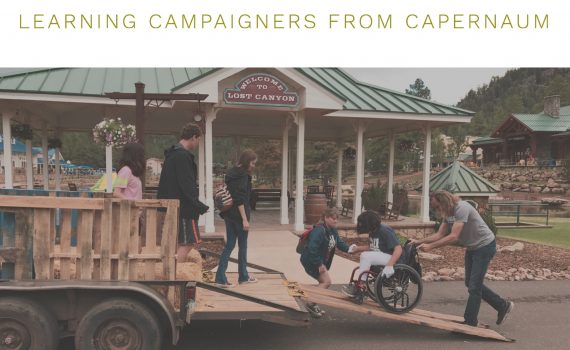
In two previous posts, I wrote about why I love the Jesus Storybook Bible (JSB) and some technical observations about Bible translation and the JSB. In this post, I want to pass along some practical ideas about utilizing the JSB, particularly for Capernaum campaigners (but all campaigners can benefit from […]
Bible
18 posts
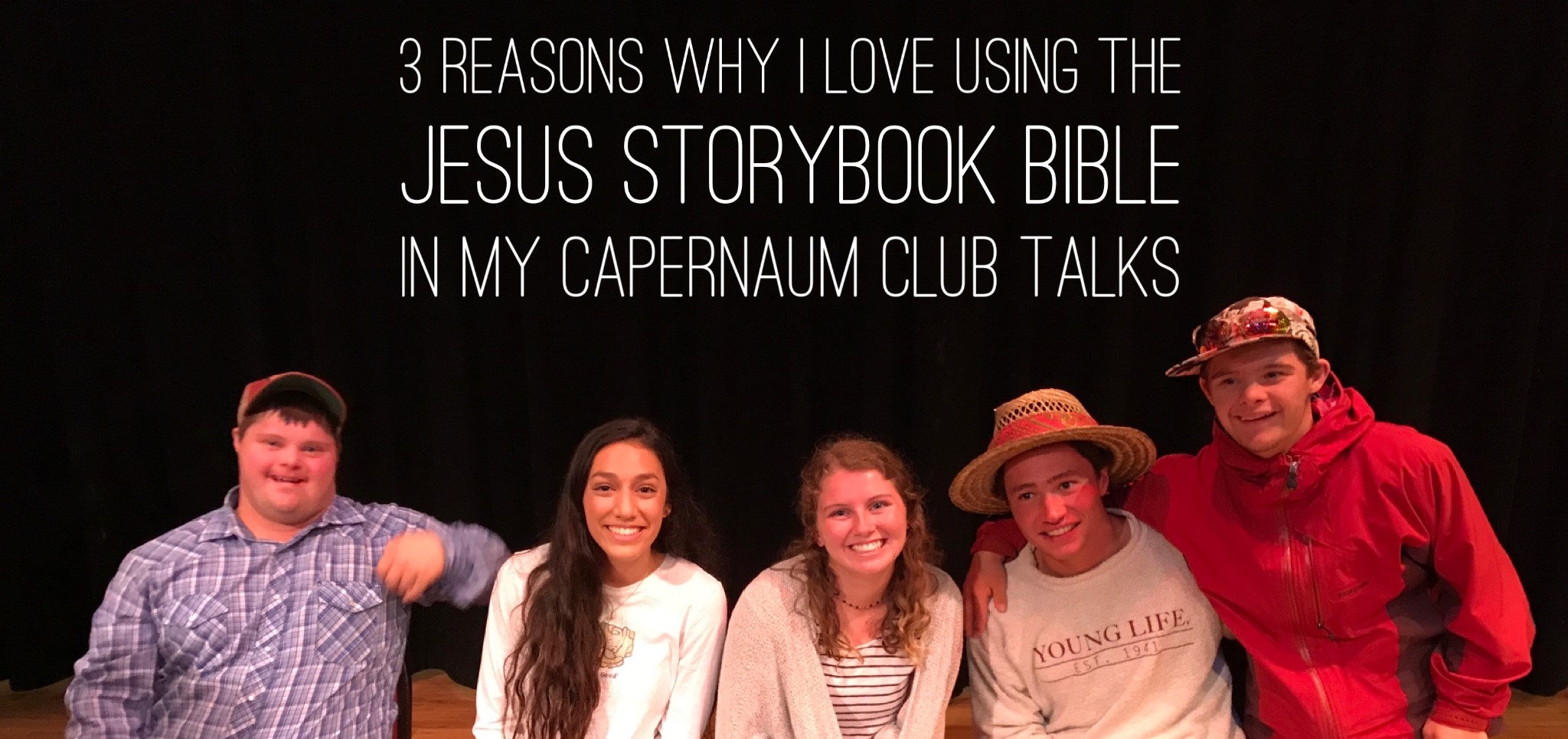
In a previous post, I discussed 3 reasons that I loved using the Jesus Storybook Bible (JSB) in my Capernaum club talks at Lost Canyon. I went even further and said that I would be working in some of the phraseology of the JSB in my club talks for all […]
Two days ago the vans and buses of Capernaum Week at Lost Canyon pulled away and I wrapped up speaking to hundreds of my new friends. While the week was full of so many blessings and lessons learned (about Capernaum ministry and myself), I want to talk about the Jesus […]
Have you ever wanted to know more about a specific word in the Bible, what it meant in the original languages? For some people, the answer is: Nope! But, for others, the answer is: Yes! Give me more! In Young Life, we speak the language of teenagers. It is a […]

You have been lied to. We all have been lied to. Satan is a liar, not only a liar but the father of lies (John 8:44). C.S. Lewis showed us the wisdom of knowing the schemes of the enemy. Below is a list of 12 lies we battle as a […]

Some of you know that I’ve put a few booklets together to help with campaigners and camp follow-up. Well, I have a new one called Wyld Questions. It is aimed at Wyldlife campaigners and I’ve been fortunate to have tried it out last summer in my area and also get […]
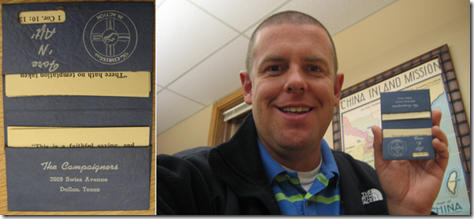
We are working through the Topical Memory System (TMS) verses from the fantastic Navigators plan. These have a long history in Young Life, in fact several years ago (with less hair and 30 extra lbs) I unearthed the old archives of Jim Rayburn in the Wheaton College collection and found […]
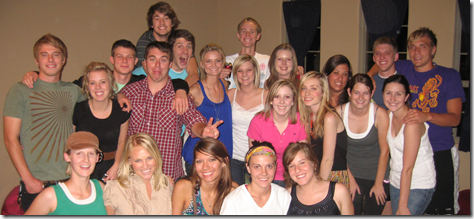
This is a series of posts which outline our leadership funnel and how we have people enter our leadership community. You can read more about it in general here. First Year Leading (FYL) is a weekly small group of college students who spent the entire year growing in Christ and […]
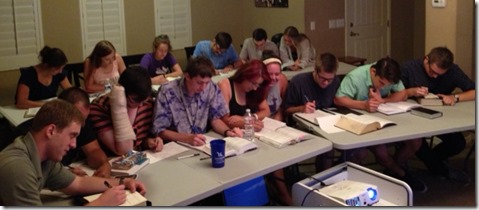
Over the summer I normally try to post a couple things that I learned over the previous school year. If you have anything you learned from last year that you would like to tell me about, send it my way smcgever (at) pv dot younglife dot org. In my first […]
I hope you enjoy YLHelp.com. I don’t do this often, but I wanted to let you know about some booklets that I have written. On YLHelp I’ve posted 258 different posts full of ideas that you can read and use anytime. Enjoy! Here are some other resources that might help […]
Over the summer I normally try to post a couple things that I learned over the previous school year. If you have anything you learned from last year that you would like to tell me about, send it my way smcgever (at) pv dot younglife dot org Our talk sequence […]
In my YL area we are going 110% on camp prep right now. One of our trips is less than two weeks away and another trip is not long after that. Here are some popular re-posts that might help with your camp prep… Camp unity outfits https://ylhelp.com/2010/05/30/camp-unity-outfits/ Camp shirts https://ylhelp.com/2010/05/01/summer-camp-shirts/